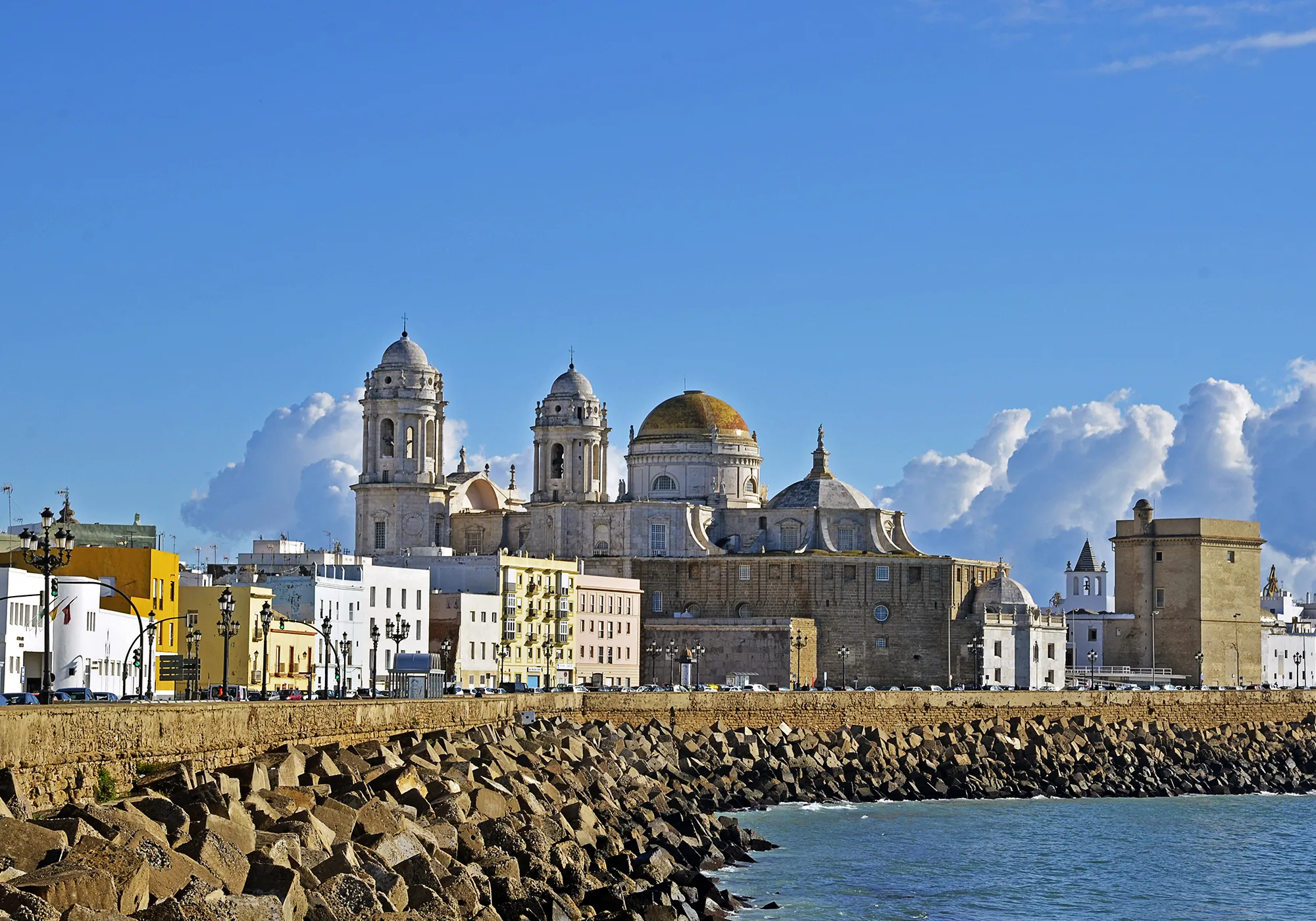
Cadiz, the jewel of southwestern Spain, is a city with 3,000 years of history, founded by the Phoenicians as Gadir. This historical link, enriched by various civilizations such as the Romans, has endowed the city with a cultural mix that is still perceived in the character of the people of Cadiz.
Located on a peninsula bathed by the waters of the Atlantic, Cadiz has been an epicentre of trade for centuries. In the 17th century, the city reached its peak by monopolizing overseas trade, attracting wealth and also the covetous glances of pirates. This prompted the construction of fortifications, bastions, castles, and rooftop watchtowers, which are distinctive of its urban landscapes along with the characteristic latticework of its balconies.
The city is not only nourished by history; its beaches are famous for their beauty. The Costa de la Luz, spread across the provinces of Cádiz and Huelva, offers a perfect combination of culture and leisure, with a bright atmosphere that lives up to its name.
For those looking to connect with nature, the Doñana National Park is a must-see. This space, declared a World Heritage Site by UNESCO, is a biodiverse refuge that offers unique landscapes and rich fauna.
Due to its historical and cultural legacy, and its natural wonders, Cádiz presents itself as a complete destination that promises both energetic adventures and moments of peace and tranquility by the sea.
In vibrant Cádiz, the imposing yellow-tiled dome of the Cathedral, a splendid example of Baroque and Neoclassical architecture, rises majestically on the Atlantic facade, watching over Campo del Sur. In its crypt lie the remains of the renowned composer Manuel de Falla, offering a corner of musical history.
Just a few steps away is the ancient Roman theatre and the old cathedral, both steeped in past stories that delight archaeology and history lovers.
The Plaza de San Juan de Dios, a space rich in history, evolved from being a royal square and market to become a testament to the progress and human interaction of this ancient city. It features the Cadiz Town Hall, a neoclassical structure that, looking out over the port, competed in importance with the sea.
A tour of Cadiz reveals a multitude of lively squares. The Plaza de España is home to the Provincial Council palace and the impressive Monument to the Liberal Courts, places of equal appeal to locals and tourists alike.
The Plaza Mina is a tree-lined oasis that houses the Cadiz Archaeological and Fine Arts Museum, which surprises its visitors with fascinating exhibitions and finds from the Phoenician civilisation.
The Plaza de San Francisco, meanwhile, seduces with the church of the same name, while the Plaza de las Flores is a bustling shopping centre where the Mercado Central is located, radiating energy through the busy surrounding streets.
Finally, the Plaza del Tío de la Tiza is the beating heart of the La Viña neighbourhood. This place is a testament to the creative spark of the Carnivals, an event of International Tourist Interest known for its chirigotas, which reflect the humour and wit of Cadiz.
Every corner in Cadiz invites visitors to explore and immerse themselves in its rich history, its vibrant culture, and its unmistakable atmosphere.